You’ve landed here because you’re likely facing a drug test and have a legitimate concern: will that muscle relaxer you’ve been prescribed or taken for an injury show up and cause problems? It’s a valid question, and one that deserves a clear, nuanced answer. The world of drug testing can feel like a minefield of unknowns, but with a little understanding, you can navigate it confidently.
Do Muscle Relaxers Show Up on Drug Tests? The Short Answer and the Nuance
Let’s cut to the chase: it depends entirely on the specific muscle relaxer, the type of drug test administered, and what the test is designed to detect. There’s no one-size-fits-all answer here. Some muscle relaxers are chemically similar to substances commonly screened for, while others are entirely distinct. It’s less about a universal “yes” or “no” and more about understanding the specific compound in question and the test’s sophistication. Think of it like a security scanner at an airport – some things will trigger an alarm immediately, while others will pass through unnoticed unless the scanner is specifically configured to find them.
Understanding Standard Drug Tests: What Are They Looking For?
Before we dive into muscle relaxers, let’s understand the landscape of drug testing itself. When an employer, a probation officer, or a sports organization orders a “drug test,” they’re not just casting a wide net for “anything foreign.” They’re looking for specific substances, often driven by legal requirements, safety concerns, or contractual obligations.
The Common Culprits: The SAMHSA-5
The gold standard for many workplace and federal drug tests is the SAMHSA-5 (Substance Abuse and Mental Health Services Administration) panel. This typically screens for five categories of illicit drugs:
- Cannabinoids: Marijuana (THC)
- Cocaine metabolites: Cocaine
- Amphetamines: Including methamphetamine and MDMA (Ecstasy)
- Opiates/Opioids: Such as heroin, morphine, codeine, and often synthetic opioids like oxycodone and hydrocodone
- Phencyclidine (PCP): Angel Dust
If a drug isn’t on this list, it generally won’t be detected by a standard SAMHSA-5 panel unless it metabolizes into one of these compounds or has a similar chemical structure that causes a cross-reaction.
Expanding the Net: Beyond the Basics
While the SAMHSA-5 is common, many tests go beyond these five. Employers, particularly those in safety-sensitive industries, might opt for expanded panels that include substances like:
- Benzodiazepines: Valium, Xanax, Klonopin, Ativan
- Barbiturates: Phenobarbital
- Methadone: A synthetic opioid
- Propoxyphene: Another opioid
- Synthetic Cannabinoids: “Spice” or “K2”
The key takeaway here is that the scope of the test dictates what can be found. A basic 5-panel test is much less likely to detect a wider range of substances than a comprehensive 10- or 12-panel screen.
The Science of Detection: How Drug Tests Work
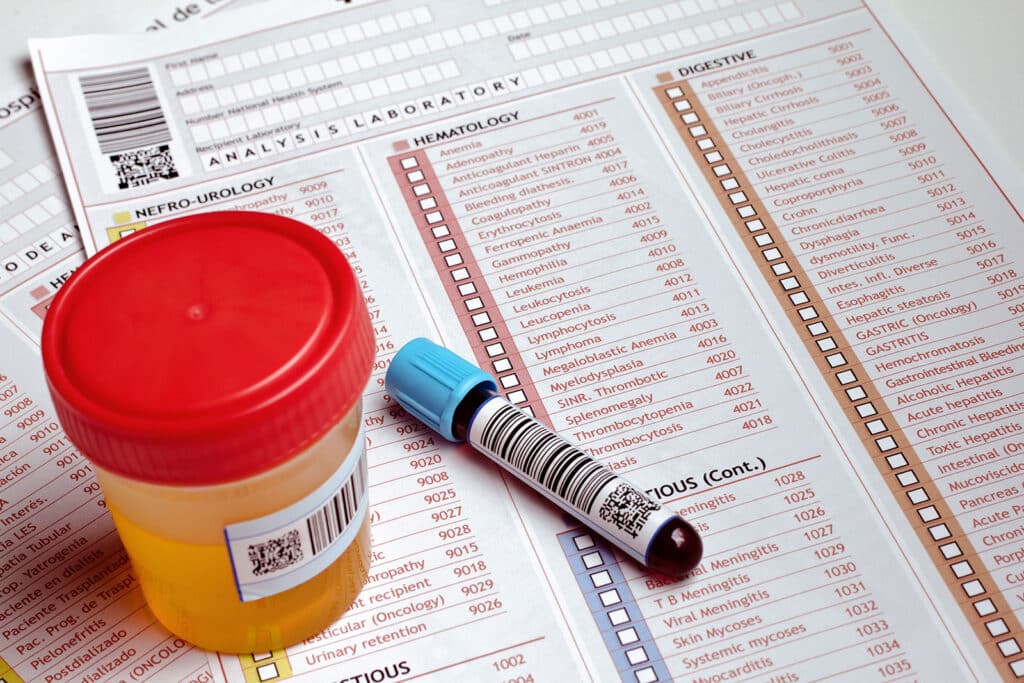
Drug tests aren’t magic; they rely on detecting specific drug metabolites or the drug itself in various bodily fluids or tissues. Understanding the mechanics helps demystify the process.
Urine Tests: The Most Common Method
Urine tests are the workhorse of drug screening due to their cost-effectiveness, ease of collection, and ability to detect drug use within a window of a few days to a few weeks (depending on the substance and frequency of use). These tests often use an immunoassay as a preliminary screen. This method employs antibodies designed to bind to specific drug molecules or their metabolites. If the antibodies bind, it triggers a “positive” result. However, immunoassays can sometimes produce false positives because similar-looking molecules can trick the antibodies. That’s why positive screens are always confirmed with more precise methods.
Blood Tests: Precision and Timing
Blood tests are less common for routine drug screening because they are more invasive and have a shorter detection window. However, they are highly accurate and can detect the presence of the drug itself (not just its metabolites) and in what concentrations. This makes them invaluable for determining recent use or impairment, such as in DUI cases. The detection window for most drugs in blood is typically only a few hours to a few days.
Hair Follicle Tests: The Long View
Hair follicle tests offer the longest detection window, typically up to 90 days, though some substances can be detected for even longer. As drugs circulate in the bloodstream, they are incorporated into the hair shaft as it grows. A small sample of hair (usually about 1.5 inches from the scalp) is enough to provide a historical record of drug use. While highly effective for retrospective analysis, hair tests are more expensive and not as good at detecting very recent drug use (within the last 7-10 days) because it takes time for the hair to grow out.
Saliva Tests: Quick and Non-Invasive
Saliva tests (oral fluid tests) are gaining popularity for their non-invasive nature and ease of collection. They detect recent drug use, typically within a window of a few hours to a couple of days. They are often used for roadside testing or in situations where immediate results are needed, though they generally require laboratory confirmation for positive screens.
Detection Windows: How Long Muscle Relaxers Stay in Your System
| Muscle Relaxer | Urine | Blood | Saliva | Hair |
| Soma (Carisoprodol) | 2-4 days | 4-6 hours | 1-2 days | Up to 90 days |
| Flexeril (Cyclobenzaprine) | 3-8 days | 24 hours | 1-2 days | Up to 90 days |
| Valium (Diazepam) | 1-6 weeks* | 24-48 hours | 1-2 days | Up to 90 days |
| Xanax (Alprazolam) | 5-7 days | 12-24 hours | 1-2 days | Up to 90 days |
| Skelaxin (Metaxalone) | 2-4 days | 4-8 hours | 1-2 days | Up to 90 days |
| Robaxin (Methocarbamol) | 1-2 days | 2-4 hours | 1-2 days | Up to 90 days |
*Note: Chronic use extends detection time
The Main Event: Muscle Relaxers and Drug Screens
Now, let’s address your core concern: specific muscle relaxers. This is where the nuance really comes into play, as each drug has its own chemical fingerprint.
Soma (Carisoprodol): A Clear Case for Concern
Yes, Soma is a major contender for showing up on a drug test. The reason is its metabolism. Carisoprodol, the active ingredient in Soma, is metabolized in the liver into meprobamate. Meprobamate is a Schedule IV controlled substance and a central nervous system depressant that can be detected on many expanded drug panels, particularly those looking for barbiturates or other sedatives. So, if you’re taking Soma, you should absolutely expect it to be detectable, especially on a comprehensive panel.
Flexeril (Cyclobenzaprine): Usually Not a Problem, But…
Flexeril is generally not screened for on standard drug tests. It is a tricyclic antidepressant derivative and is chemically distinct from the common illicit drugs. Therefore, it’s highly unlikely to trigger a positive on a basic 5-panel test. However, very specialized tests, often employed in forensic toxicology or highly specific clinical settings, could detect it. For the vast majority of workplace or probation drug tests, Flexeril should not be an issue. Always remember, though, that individual body chemistry can sometimes lead to unexpected results.
Valium/Xanax (Benzodiazepines): A Different Category Altogether
While Valium (diazepam) and Xanax (alprazolam) are often used as muscle relaxants due to their sedative properties, they are primarily categorized as benzodiazepines. And yes, benzodiazepines are very commonly included on expanded drug panels (e.g., 10-panel tests). If your drug test includes a benzodiazepine screen, taking Valium or Xanax will almost certainly result in a positive. These drugs are frequently prescribed but are also substances of abuse, which is why they are often targeted.
Skelaxin (Metaxalone) and Robaxin (Methocarbamol): Generally Safe
Skelaxin and Robaxin are generally considered safe bets in terms of not showing up on standard drug tests. Their chemical structures and metabolic pathways are not typically cross-reactive with the substances targeted by common immunoassay screens, nor are they usually included in expanded panels. They are not controlled substances in the same way Soma or benzodiazepines are, reducing the likelihood of them being specifically sought out. For most practical purposes, you shouldn’t anticipate these causing a positive result.

False Positives and Unexpected Interactions: A Word of Caution
The world of drug testing isn’t always black and white. Sometimes, innocent substances can mimic illicit ones, leading to frustrating and potentially costly false positives. It’s crucial to be aware of these possibilities.
OTC Medications and Dietary Supplements
Believe it or not, some common over-the-counter medications and even dietary supplements can trigger false positives on initial immunoassay screens. For instance:
- Pseudoephedrine/Phenylephrine (found in many cold and allergy meds): Can sometimes trigger false positives for amphetamines.
- Ibuprofen/Naproxen (NSAIDs): Rarely, but has been known to cause false positives for cannabinoids or barbiturates on some older immunoassay tests.
- Dextromethorphan (DM, cough suppressants): Can occasionally lead to false positives for PCP or opiates.
- CBD products: While legal in many places, some CBD products, especially those not rigorously tested, can contain trace amounts of THC that could accumulate and trigger a positive for marijuana.
Poppy Seeds: The Classic Example
The infamous poppy seed bagel is perhaps the most well-known culprit for a false positive for opiates. Poppy seeds contain trace amounts of morphine and codeine. While unlikely to cause a positive on a highly sensitive test with a high cutoff level, consuming a large amount of poppy seeds (like a heavily seeded bagel or muffin) shortly before a drug test could theoretically trigger an initial screen. This is why confirmatory tests are so important.
Prescription Medications: Always Disclose
This is the golden rule: always disclose all prescription medications, over-the-counter drugs, and even significant supplements you are taking to the collection facility or medical review officer (MRO) BEFORE your test results are finalized. Providing this information upfront, along with proof of a valid prescription, is your best defense against a false positive being misinterpreted as illicit drug use. The MRO is trained to differentiate between legitimate prescriptions and illicit prescription drug use.
Navigating a Positive Result: What to Do
If you receive a positive result, don’t panic. There’s a process in place to ensure accuracy and fairness.
Verification and Confirmation: The GC/MS Test
A preliminary positive screen is never considered final. Any positive immunoassay result is always sent for a confirmatory test, typically Gas Chromatography/Mass Spectrometry (GC/MS) or Liquid Chromatography/Mass Spectrometry (LC/MS). These are highly precise analytical methods that can definitively identify the specific drug or metabolite present and quantify its amount. They can distinguish between similar compounds and rule out false positives from cross-reactivity. If the GC/MS test comes back negative, your initial “positive” is overturned.
Providing Documentation: Your Prescription is Your Proof
If the GC/MS confirms the presence of a prescribed medication (like a benzodiazepine or Soma), this is where your documentation becomes critical. The Medical Review Officer (MRO) will contact you. This is your opportunity to provide proof of a valid prescription from a licensed healthcare provider. The MRO will then verify the prescription and, if legitimate, will report the test as “negative” or “negative with a valid medical explanation,” meaning you passed the test because the detected substance was medically authorized.
Legal and Employment Implications: Understanding Your Rights
Understanding your rights is crucial. Most jurisdictions have laws protecting employees who test positive for legitimately prescribed medications. However, there can be nuances, especially in safety-sensitive positions where a specific medication’s short term side effects (like drowsiness) could impair performance. An MRO will also assess if the dose is therapeutic or indicative of abuse. In certain cases, an employer might require a doctor’s note clearing you for duty while on the medication, or they might offer reasonable accommodations.

Why Does This Matter? The Employer and Legal Perspective
From an employer’s viewpoint, drug testing isn’t just about catching illicit drug users; it’s about creating a safe, productive, and compliant work environment.
Workplace Safety and Impairment
Many medications, including some muscle relaxers, can cause drowsiness, dizziness, or impaired coordination. In jobs involving heavy machinery, driving, or critical decision-making, even a legitimate prescription can pose a safety risk if it impairs the employee. Employers have a right, and often a legal obligation, to ensure their workforce is fit for duty.
Drug-Free Workplace Policies
Most companies, especially larger ones, have comprehensive drug-free workplace policies. These policies often outline specific rules regarding prescription medication use, particularly for substances that can cause impairment. Employees are typically expected to inform HR or their supervisor if they are taking medications that could affect their job performance or workplace safety.
Legal Requirements for Specific Professions
Certain professions, such as commercial truck drivers (DOT regulations), pilots, healthcare workers, and federal employees, are subject to stringent drug testing regulations. These regulations often specify the types of drugs tested for, the testing procedures, and the consequences of positive results, even for prescribed medications if they are deemed impairing.

The Takeaway: Knowledge is Your Best Defense
Navigating drug tests while taking prescription medications can feel daunting, but it doesn’t have to be. Your best defense is knowledge and proactive communication. Understand what your specific muscle relaxer is, what type of drug test you’re facing, and always, always be transparent with the medical review officer about your prescriptions.
Being informed about which muscle relaxers might be detected, the mechanisms of drug testing, and the importance of disclosing your medications will empower you to face any drug screening with confidence. Don’t let uncertainty become a source of anxiety; arm yourself with the facts.
FAQ
How do factors like dosage, liver function, and the type of muscle relaxer affect detection times and withdrawal symptoms?